
The Growing Political Tensions Surrounding Imran Khan
In recent days, the political scene in Pakistan has become increasingly turbulent, particularly surrounding the situation of former Prime Minister Imran Khan, who’s currently incarcerated at Adiala Jail. The Pakistan Tehreek-e-Insaf (PTI) party, of which Khan is the leader, is raising alarms about his health and the lack of access to him.
On Thursday, PTI spokesperson Zulfikar Bukhari made it clear that no one from Khan’s family or legal team has seen him since November 4. The concern over his well-being is palpable, and Bukhari insists that immediate access must be granted to all concerned parties. The frustration is palpable as they face repeated denials from jail authorities, alleging that scheduled meetings under the jail manual have been suspended without valid reasoning.
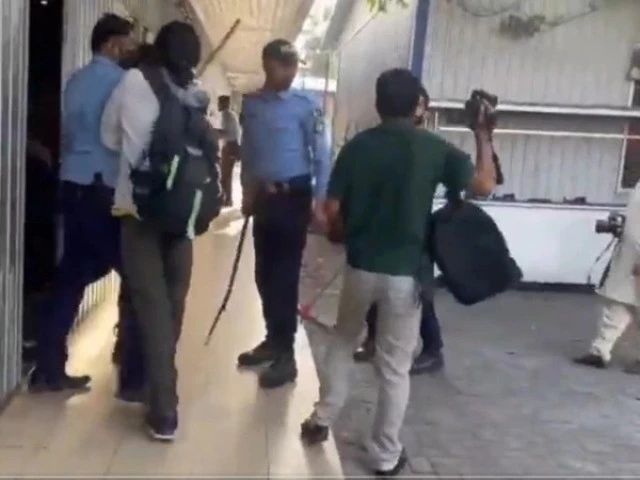
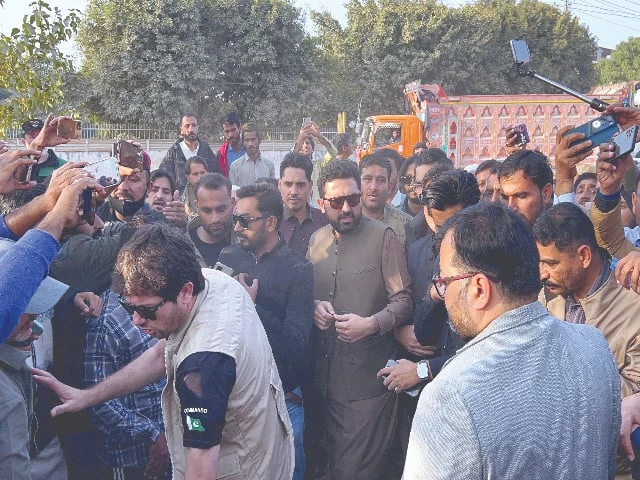
The political agitation further escalated when Khyber-Pakhtunkhwa Chief Minister Sohail Afridi staged a sit-in protest, unable to reach Adiala Jail for what he claimed was his eighth attempt to meet Khan. Afridi’s accusations against the authorities were serious—he stated they were disregarding court orders by obstructing his visit. This not only highlights the strife regarding Khan’s treatment but also raises broader questions about governance and accountability in Pakistan.
Sohail Afridi’s remarks at the Gorakhpur checkpoint show a deep-seated resentment toward how his province is treated, likening it to a “stepchild.” If tensions continue to simmer, we risk deeper divisions within the country. He also expressed concerns over recent electoral processes, asserting that widespread voting irregularities have eroded public trust in the government.
The narrative inside the Senate mirrors these frustrations, where heated debates have erupted. PTI senators are vocal about what they term Khan’s “solitary confinement” and restricted access. Minister of State for Interior Talal Chaudhry has countered these claims, outlining the privileges Khan reportedly enjoys, such as quality meals and exercise facilities. However, PTI’s leadership is not convinced and insists these amenities do not justify the lack of family contact.
Khan has been facing a 14-year sentence on corruption charges since August 2023, and PTI is calling attention to what they view as prolonged isolation that violates prison regulations. Online campaigns have even sprung up, using the hashtag “WHEREISIMRANKHAN” to draw public attention to the matter.
As the political scene unfolds, one thing is clear: the demands for transparency and justice are growing louder. The resolve shown by it PTI and its supporters speaks to a broader desire for political accountability in Pakistan.
For those interested in staying updated on these developments and exploring the political landscape further, staying connected with insightful platforms like Pro21st can provide valuable context and analysis.
At Pro21st, we believe in sharing updates that matter.
Stay connected for more real conversations, fresh insights, and 21st-century perspectives.