
Pakistan’s Cautious Response to Afghan Ulema Declaration
In a notable development, Pakistan has expressed a measured but hopeful response to a recent declaration by over 1,000 Afghan Ulema in Kabul. The foreign office emphasized that any real impact of this five-point declaration hinges on written assurances from the Afghan Taliban leadership—something Islamabad has been seeking but has yet to receive.
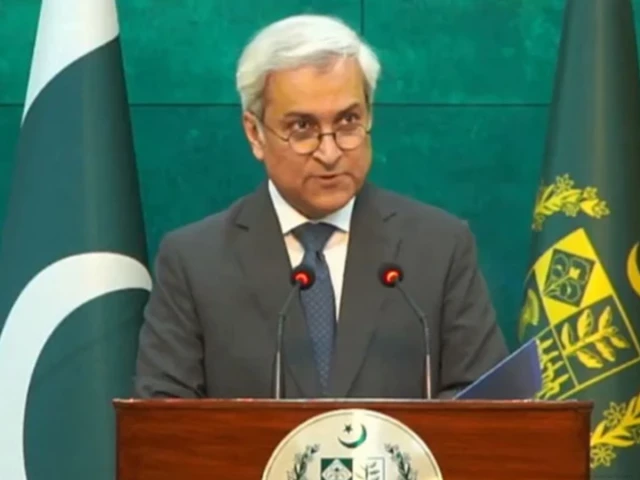
Foreign Office spokesperson Tahir Andrabi noted that Pakistan has taken a "positive note" of the Ulema’s joint declaration, which boldly stated that military operations beyond Afghanistan’s borders will be seen as rebellion. Although the declaration did not name Pakistan directly, many believe it targets groups like the Tehreek-e-Taliban Pakistan (TTP), which has previously launched attacks within Pakistan.
This internal religious endorsement against cross-border terrorism is a significant move. "If segments of Afghan society realize the gravity of the situation—that their soil is being used by various groups to perpetrate terrorism against Pakistan—that’s a positive sign," Andrabi said. However, he was quick to mention that Pakistan would observe how the Afghan Taliban respond to this declaration, noting that past commitments have often gone unfulfilled.
The Foreign Office’s tone reflects ongoing frustrations in Islamabad over rising violence linked to groups operating from Afghan territory. Officials are particularly concerned about the need for a formal decree from the Taliban’s supreme leader, which they believe could have the necessary authority to rein in these militant networks.
Another layer of complexity has been added to the situation with humanitarian aid. Recently, Pakistan opened its borders to facilitate aid convoys into Afghanistan. However, the Afghan Taliban administration has publicly rejected this support, even threatening to block bilateral trade. Andrabi described Kabul’s reaction as "unprecedented," given the serious economic and humanitarian crises facing the nation.
"We’re willing to facilitate aid as part of our care for the brotherly people of Afghanistan," he stated. But the rejection indicates a widening gap between the Taliban’s public commitments and their actions on the ground.
Though details on new measures were not explicitly outlined during the briefing, Andrabi reiterated Pakistan’s intention to secure firm, written guarantees that Afghan territory will not be used against it.
While Islamabad cautiously views the Ulema Council’s declaration as a potential turning point, officials remain cautious, as prior promises from the Taliban have not resulted in decisive action.
In addition to these pressing issues, questions have arisen regarding US lawmakers’ concerns over rights issues in Pakistan. Andrabi assured that Islamabad maintains open channels of communication with Washington, emphasizing that Pakistan’s position is clearly presented through diplomatic channels. He also welcomed news of a US sustainment package for Pakistan’s F-16 fleet, framing it as part of ongoing defense cooperation.
This situation underscores the fragility of regional stability and the importance of concrete promises in international relations. If you’re interested in staying updated on these developments and more, check in with Pro21st for insights on geopolitical issues that matter.
At Pro21st, we believe in sharing updates that matter.
Stay connected for more real conversations, fresh insights, and 21st-century perspectives.