
The Farmers’ Protest and the Future of EU Trade Deals
In recent weeks, the streets of Brussels have echoed with the sounds of protesting farmers, driven by a deep concern over the EU’s trade dealings—especially the controversial Mercosur agreement. Picture this: around 1,000 tractors, honking their horns, converge on the Belgian capital as farmers voice their frustrations about potential reforms to the Common Agricultural Policy (CAP) and trade agreements with South American nations. It’s a situation that underscores some of the deep divides within the European Union.
At the heart of the matter is the worry that this trade deal could place local farmers at a disadvantage, allowing a flood of cheaper imports from Brazil and its neighbors. Advocates for the agreement argue that it could enhance exports, especially as Europe faces stiff competition from China and an unpredictable U.S. trade administration. Yet, many farmers in countries like France are understandably anxious. They fear being undercut, which could threaten their livelihoods and the future of agriculture in Europe.
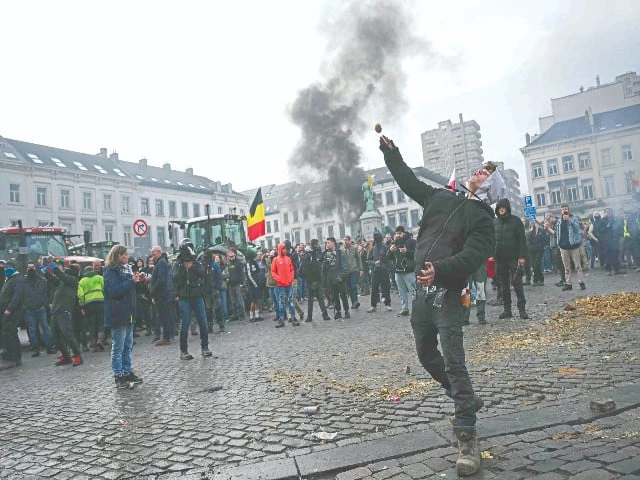
Tensions reached a boiling point during a recent protest, where nearly 7,000 farmers marched peacefully until confrontations erupted. Fireworks lit up the sky as protesters called for attention to their plight, even throwing potatoes—an act that, while symbolic, carried a weighty message about their frustrations. The situation escalated when police responded with tear gas and water cannons to disperse the crowd, highlighting the urgency of these discussions and the high stakes involved.
Interestingly, Brazil’s President Lula da Silva has shown a willingness to postpone the agreement based on Italian Prime Minister Giorgia Meloni’s request for delay. The collaboration among European leaders reflects a complex balancing act between supporting farmers and pursuing economic growth. As this ongoing saga unfolds, the dynamic within the EU will be closely watched by all stakeholders involved.
Ultimately, the farmers’ protest serves as a reminder of the challenges that come with large-scale trade agreements. It calls us to consider the impact on local economies and communities, and how balancing interests might be key to any successful future trade policy. If you’re looking to keep tabs on such developments and explore how they might affect various sectors, resources like Pro21st offer valuable insights. It’s essential to stay engaged in these discussions, as they shape our economy and society moving forward.