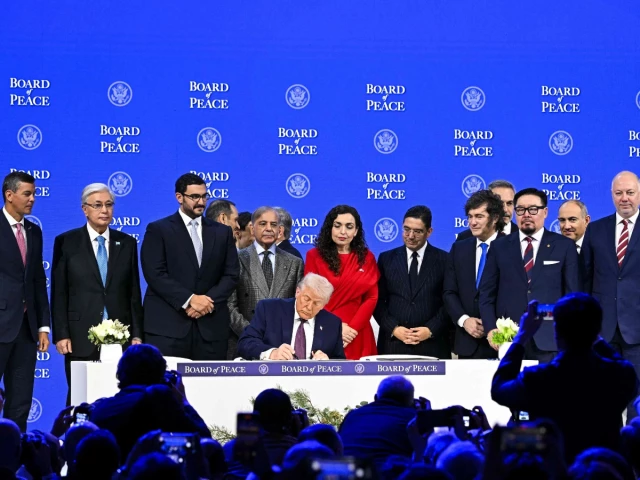

Understanding Trump’s Board of Peace: What You Need to Know
In a world often fraught with conflict, the announcement of the “Board of Peace” by Donald Trump at the World Economic Forum in Davos has sparked quite a bit of conversation. Formed with 26 founding members, including countries like Pakistan, Argentina, and Türkiye, this initiative aims to oversee peace-building efforts on a global scale. But what does it really mean for the countries involved, and why are some major players notably absent?
One of the most striking aspects of this board is the list of nations it includes—spanning Europe, Asia, the Middle East, and Latin America. However, major European countries like France, Germany, and the United Kingdom have chosen to sit this one out. This absence is largely due to disagreements over key issues, such as tariff policies and Trump’s approach to international relations.
Interestingly, the Board of Peace was introduced just after a ceasefire agreement for Gaza, suggesting that its foundation is tied closely to immediate geopolitical concerns. The initiative aims to oversee not only the reconstruction of Gaza but also broader peace efforts in areas at risk of conflict.
At the launch, various leaders posed with Trump, showcasing a diverse range of perspectives united under this new framework. However, it wasn’t without controversy. For instance, Ukraine expressed concerns about its potential involvement due to its complicated relationship with Russia—a nation that was not invited to join, despite Putin’s willingness to contribute financially.
Canada, meanwhile, found itself removed from the list after PM Mark Carney’s critical remarks at the WEF, highlighting the delicate dynamics at play.
Ultimately, while the Board of Peace presents an opportunity for several nations to collaborate on pressing global issues, the path forward remains unclear. There are still many questions regarding its leadership structure, full mandate, and timeline for implementation.
In a rapidly changing geopolitical landscape, the Board of Peace could be seen as either a bold move toward stability or a point of contention among world powers.
If you want to stay updated on these developments and explore how global events affect us all, connecting with platforms like Pro21st can offer valuable insights and discussions on the topics that matter.