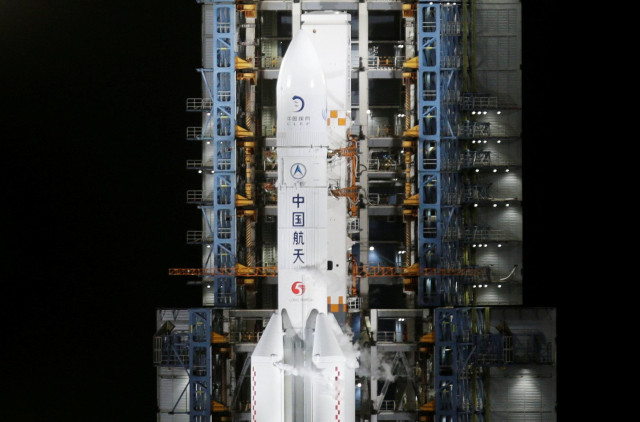

China’s Leap in Space: A New Reusable Spacecraft Makes History
China has taken another significant step in its space exploration journey with the successful launch of a reusable experimental spacecraft. This mission, which was carried out using a Long March-2F carrier rocket, took off from the Jiuquan Satellite Launch Centre on Saturday, marking a notable achievement reported by state news agency Xinhua.
What makes this mission particularly exciting is its focus on technological verification for reusable spacecraft. These advancements are important not only for China’s space ambitions but also for the broader goal of making space travel more efficient and cost-effective. While details like the craft’s duration in orbit or the specific technologies being tested were not disclosed, it’s clear that this launch is part of a larger trend toward sustainable space missions.
Reusable spacecraft are a game-changer. They promise to increase the frequency of launches and reduce costs significantly, making space exploration more accessible. Since 2020, China has successfully launched its reusable spacecraft multiple times, with each mission building on the last. The first successful launch in September 2020 saw the craft orbit for two days, while a mission launched in August 2022 stayed in orbit for an impressive 276 days before returning to Earth in May 2023.
This continuous progress highlights China’s determination to be a pivotal player in the ever-evolving landscape of space exploration. The international community is watching closely as these developments unfold, raising questions about future collaborations and advancements in technology that could benefit all of humanity.
As we lean into this new era of space travel, it’s essential to stay informed about advancements not just in technology but also in the practices that lead to peaceful uses of outer space. Interested in diving deeper into space exploration or other scientific innovations? Join us at Pro21st for engaging discussions and insights!