
Understanding the Moon’s Crater History: A Groundbreaking Study
The Moon, with its stunning craters painted across its surface, isn’t just a pretty sight; it’s a historical record waiting to be read. Recently, scientists made a significant discovery that changes how we view lunar history. For the first time, research has confirmed that the impact cratering rates on both the near and far sides of the Moon are strikingly consistent. This finding lays the groundwork for a unified lunar chronology, a much-needed system to understand our natural satellite’s geological evolution.
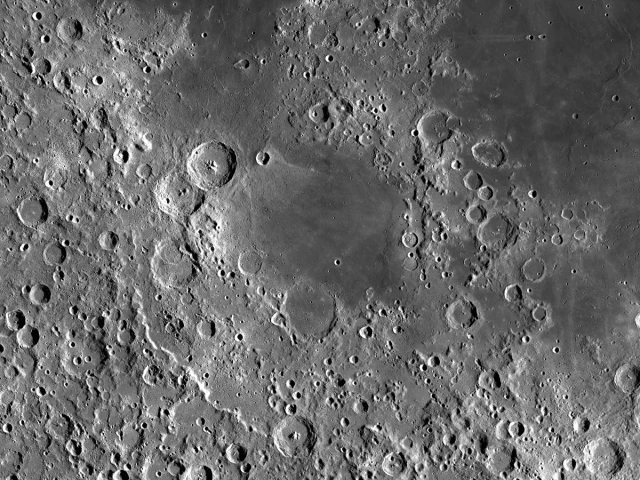
A team led by experts from the Chinese Academy of Sciences took a giant leap forward by analyzing remote sensing images. They rewrote decades of understanding with their findings published in Science Advances. Instead of the previously thought dramatic fluctuations in impact events, their study reveals a smoother trend of gradual decline over time. This is crucial for mapping out the ages of different lunar surfaces since impact craters are like nature’s timestamps; a higher density of craters usually indicates an older surface.
Traditionally, scientists relied heavily on impact craters from the near side of the Moon, where samples were easier to collect. This method had its flaws, primarily because the oldest samples didn’t dive deeper than 4 billion years. This gap kept debates alive about the Moon’s early impact history, including theories like the Late Heavy Bombardment.
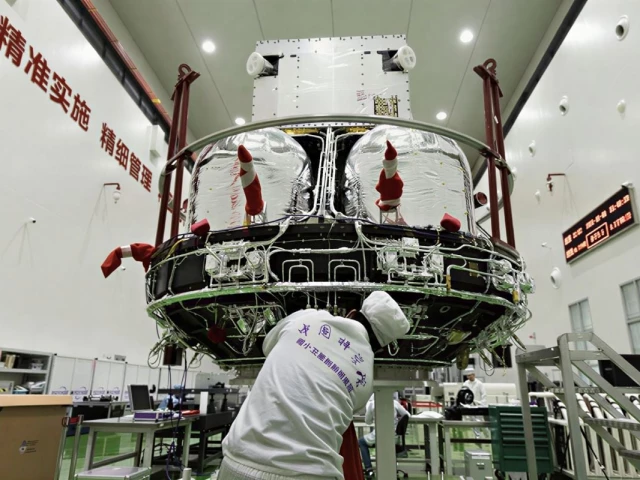
The breakthrough came in June 2024, when China’s Chang’e-6 lunar probe returned nearly 2,000 grams of samples from a site in the South Pole-Aitken Basin, the largest and most ancient impact site on the Moon. Here, scientists identified key rock types: younger basalt aged around 2.8 billion years and ancient norite formed about 4.25 billion years ago. The norite, in particular, emerged from magma crystallizing shortly after the massive impact that created the South Pole-Aitken Basin.
Using high-resolution imagery, researchers systematically mapped crater densities in the area around the Chang’e-6 landing site. They then combined this new density data with historical samples from previous missions like Apollo and Luna to create a more accurate lunar impact chronology model. The surprising result? The data from the far side of the Moon matched perfectly with what had been derived from the near side, revealing a homogenous impact flux across the Moon.
Yue Zongyu, the lead author of the study, emphasizes that this breakthrough fundamentally enhances our understanding of lunar impact history. This refined chronology is not only vital for lunar studies but also offers a stronger basis for dating the surfaces of other celestial bodies in our solar system.
Understanding the Moon, with its craters and ancient history, can inspire new explorations and discoveries beyond our planet. If you’re interested in the latest in space research and want to stay updated, connect with Pro21st for further insights and discussions on advancements in science and technology. The Moon is just the beginning!