
Navigating Uncertainty: Life in the Gulf Amidst Regional Strife
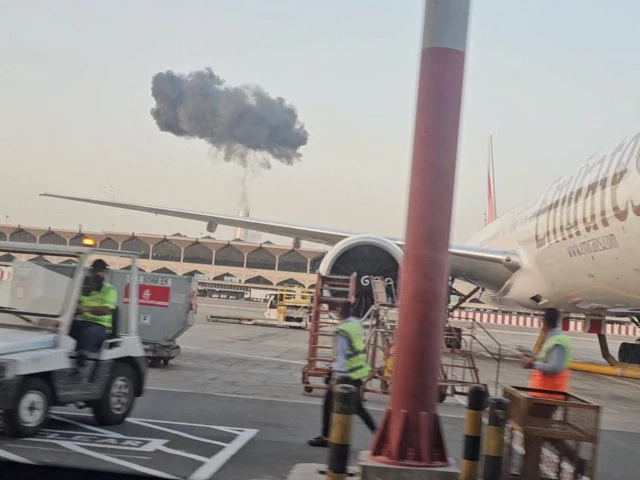
As the dust of conflict settles over the Gulf, residents find themselves adapting to an all-too-familiar, yet unsettling rhythm. Nearly two weeks into the heightened tensions from the U.S.-Israeli conflict with Iran, life has morphed into something resembling a scene from a tense thriller. Picture a post-Iftar spin class in Doha with the instructor urging everyone to channel their “positive energy.” It’s hard to focus on positivity when the sound of missile alerts punctuates an otherwise routine day.
In Dubai, residents have exchanged beach towels for an eagle eye on the skies, as fighter jets chase drones overhead. Meanwhile, the customary Ramadan cannons are on hiatus—no need to add more explosions to an already chaotic soundtrack. Daily life seems like a balancing act between routine and surreal, with the constant backdrop of security alerts.
In the corporate world, workers are learning the fine art of fleeing offices at the slightest mention of danger. Even mundane tasks, like navigation through Google Maps, have turned into a bit of a guessing game, leaving delivery drivers stranded in the desert or at sea. To help everyone cope, the UAE has even decided to tone down mobile alerts at night—a small comfort in such strange times.
Yet amidst the chaos, what’s striking is the Gulf states’ cautious response towards the U.S. While they absorb the brunt of the conflict they once urged the U.S. to steer clear of, public anger hasn’t been directed at Washington. Instead, eyes are fixed on Tehran, with leaders expressing a sense of betrayal from Iran after years of fostering diplomatic ties. Qatar’s Prime Minister encapsulates the sentiment, labeling Iran’s actions as premeditated and disastrous for regional peace.
Interestingly, Gulf states aren’t ready to sever ties with the U.S. Instead, they seem to be broadening their security partnerships. Qatar’s spokesperson recently emphasized that their alliance with the U.S. remains solid, suggesting that the current turmoil may actually reinforce their military cooperation.
What’s clear is that the Gulf is at a crossroads, realizing that relying on a single ally has left them vulnerable. European nations have stepped into the void, providing military support in ways that highlight this shift in strategy.
As things continue to evolve, understanding this delicate balance of alliances becomes essential, whether for business ventures or regional stability. The Gulf states are not pivoting away from Washington; instead, they are taking a proactive approach to diversify their partnerships in an unpredictable world.
For those interested in staying ahead of developments in this region and beyond, connecting with platforms like Pro21st can provide valuable insights and updates. The complexities of global affairs are ever-changing, and being informed is key to understanding our world today.