
NASA’s Artemis II Mission: A Giant Leap Towards the Moon
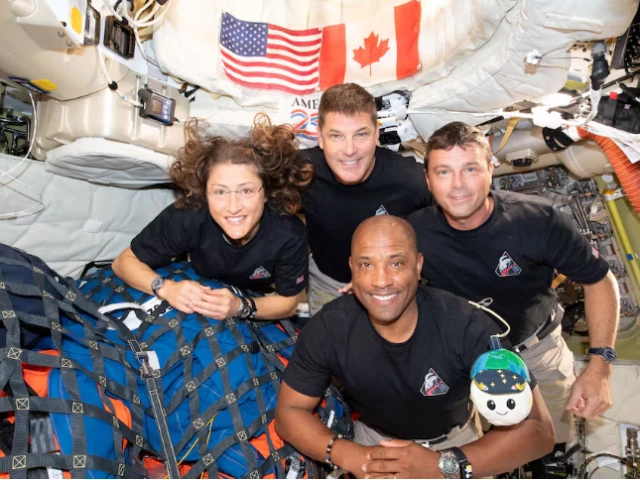
The excitement surrounding NASA’s Artemis II mission is palpable. As the crew composed of Commander Reid Wiseman, Pilot Victor Glover, and Mission Specialists Christina Koch and Jeremy Hansen journey back to Earth after a breathtaking lunar flyby, they are not just making history—they’re setting the stage for humanity’s future in space.
On April 6, 2026, the team shattered records, traveling approximately 252,000 miles from Earth, surpassing the Apollo 13 crew’s distance by about 4,000 miles. As they prepare for their splashdown off the southern California coast, emotions are high. Their first press conference from space shared glimpses into their thoughts and experiences, with Glover expressing his thrill about re-entering the atmosphere: "Riding a fireball through the atmosphere is profound."
The importance of this mission extends beyond the realm of science; it represents a stepping stone for future lunar exploration and even missions to Mars. The Artemis program aims not just for a return to the moon by 2028, but to establish a long-term human presence there. Koch likened their efforts to a "relay race," emphasizing the communal spirit of exploration. The next mission, Artemis III, is already generating buzz about potential lunar landings.
Back on Earth, scientists monitor the crew’s findings, engaged in collaborative discussions often not possible at such a distance. The mission’s scientific contributions could yield a deeper understanding of our solar system, as the moon serves as a time capsule of its formation.
As we cheer on these astronauts, it’s clear that their journey is an inspiration for generations to come. If you’re interested in more insights and updates regarding space exploration and related technologies, connecting with Pro21st can provide you with valuable information and resources. Let’s continue to support humanity’s quest to reach the stars!