
China’s Leap into Reusable Rockets: A New Era in Space Technology
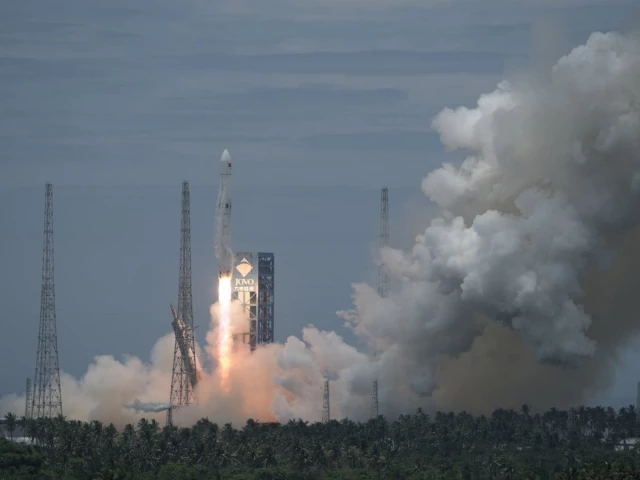
In recent years, the space race has heated up significantly, with nations and private companies striving to make strides in reusable rocket technology. On July 10, 2026, China marked a notable achievement when the Long March 10B carrier rocket successfully lifted off from the Wenchang Spacecraft Launch Site and later returned to an offshore platform for a controlled recovery. This remarkable event not only showcases China’s growing capabilities but also highlights its ambition to challenge the dominance of established players like SpaceX.
The Long March 10B, comparable to SpaceX’s Falcon 9, is designed to carry substantial payloads—up to 16 metric tons—into low-Earth orbit. Unlike the Falcon 9’s autonomous landing on drone ships, this rocket uses an innovative net recovery system. With four landing hooks catching a net on a sea platform, the approach simplifies the rocket’s design and enhances payload capacity. CALT expert Chen Muye emphasized that this net-based method allows for greater flexibility in landing, making it adaptable to various landing conditions.
Why does this matter? Reusable rockets significantly lower the cost of launching satellites and other payloads into space. This is vital as China expands its commercial satellite network. By investing in such technologies, China is not just looking to keep pace but also to potentially leap ahead in the global aerospace market.
The success of the Long March 10B marks a critical milestone for China, signaling its readiness to engage more competitively in the global satellite launch market. This advancement comes after nearly a decade of research and development in reusable technologies, including numerous trials and prototypes.
As private companies in China ramp up their efforts in rocket recovery techniques, the state is also easing IPO rules to increase funding for these ventures. This collaborative push between public and private sectors may further enhance China’s capabilities, leading to significant advancements in both space exploration and commercial opportunities.
For those eager to dive deeper into the exciting world of space technology and explore how innovations like the Long March 10B might shape our future, stay connected! Following developments like this not only fascinates but also underscores the potential of global cooperation in space exploration. For more updates and insights on technology and space missions, don’t forget to check out Pro21st. Your gateway to cutting-edge knowledge awaits!