
Bridging the Gap: China and Europe Unite for Earth Observation
In an exciting new chapter for environmental science, China and Europe are teaming up to enhance Earth observation data for the sake of our planet’s future. Imagine two mighty forces combining their expertise and satellite capabilities to tackle pressing global challenges. That’s exactly what’s happening as these two continents work together in their shared mission to protect the environment.
During a recent interview, Rune Floberghagen, the head of the European Space Agency’s (ESA) Department of Climate Action, highlighted the significant strides both regions have made in Earth observation. “We all have strong assets in space,” he emphasized, showcasing the collaborative spirit blossoming between them. Their joint efforts not only enhance scientific knowledge but also serve as a powerful tool in the fight against climate change.
The Dragon Program, launched in 2004, has been pivotal in this collaboration, fostering long-term relationships between Chinese and European scientists. Over the years, it has facilitated hundreds of projects that focus on Earth science. “Without this program, collaborative efforts on this scale simply wouldn’t exist,” Floberghagen acknowledged. Trust is the backbone of this partnership, enabling researchers to freely share data and tackle challenging environmental issues together.
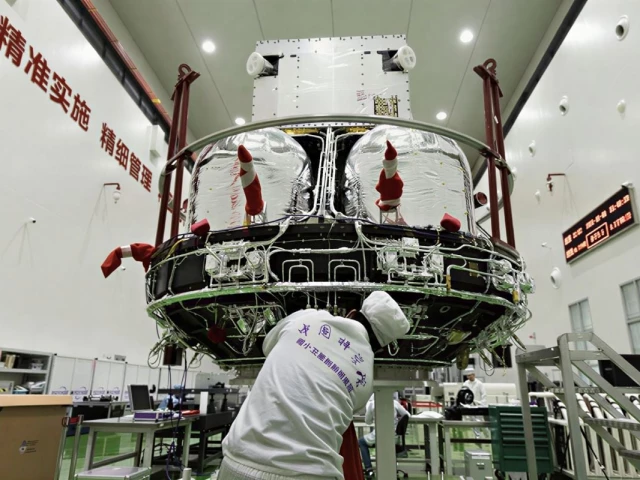
China’s rapid advancements in Earth observation capabilities have particularly impressed many experts, including Floberghagen. He noted that the country has developed an extensive set of tools for monitoring atmospheric conditions, land quality, and vegetation health. By leveraging Europe’s foundational knowledge in Earth observation, China has propelled its own capabilities, transforming theoretical decisions into practical solutions at remarkable speed.
This partnership aims to evolve beyond mere data gathering into practical applications that can be used by emergency responders and environmental agencies. “We’re seeing a shift toward real-world applications,” Floberghagen stated, anticipating that future initiatives will prioritize tangible outcomes. This evolution aligns perfectly with the increasing urgency surrounding climate change.
As they look to the future, both sides are excited about new observational technologies and measurements that are becoming possible from space. Imagine leveraging cutting-edge tools to monitor atmospheric carbon dioxide or assess plant health — that’s the direction they’re headed. Emerging scientists passionate about environmental preservation are also seen as a vital piece of this collaboration.
It’s an inspiring time in the realm of Earth observation, proving that when countries come together with a shared vision, they can create a louder voice for our planet. To learn more about Earth observation and how science is evolving, consider exploring insightful platforms like Pro21st, where you can deepen your understanding and connect with like-minded individuals passionate about global change.