
Strengthening Regional Cooperation: Insights from the ECO Council of Ministers Meeting
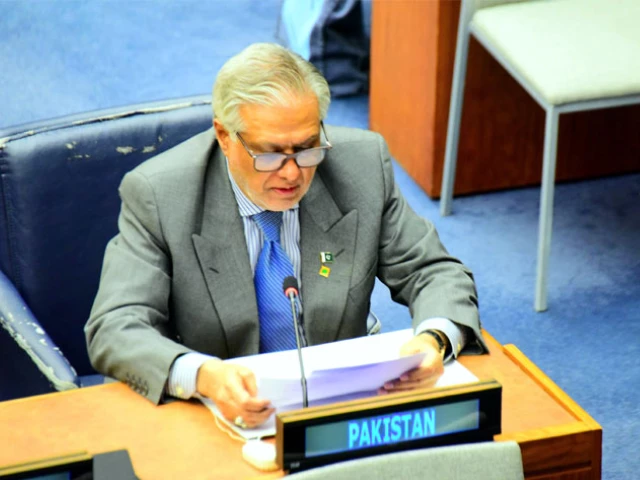
In today’s interconnected world, regional cooperation is more vital than ever. Just ask Ishaq Dar, Pakistan’s Deputy Prime Minister and Foreign Minister. He recently emphasized this during the 29th Meeting of the Economic Cooperation Organization (ECO) Council of Ministers, held virtually alongside the 80th Session of the UN General Assembly.
The ECO, which includes countries from Asia and beyond, serves as a platform for fostering economic integration and connectivity. Dar highlighted the pressing need for ECO member states to ramp up cooperation in sustainable transport and transit trade. After all, effective logistics can significantly boost economies and create a smoother flow of goods and services across borders.
One of the critical points that Dar raised was the necessity for customs harmonization. This means that member countries should work towards establishing a unified framework for customs regulations. Simplifying and streamlining these processes would not only make trade easier but also strengthen economic ties among member states.
Climate resilience is another area that needs attention. As global climate issues escalate, ensuring that infrastructure investments consider environmental impacts is crucial for sustainable growth. Dar called for regional efforts to develop climate-resilient infrastructure, an initiative that can protect communities and bolster economies.
In his remarks, Dar also congratulated Yermek Kosherbayev, the Minister of Foreign Affairs for Kazakhstan, for successfully hosting the meeting. Acknowledging the efforts of others, such as Seyyed Abbas Araghchi, the Foreign Minister of Iran, and ECO Secretary General, Dr. Asad Majeed Khan, illustrates the collaborative spirit that ECO embodies.
The Deputy Prime Minister reaffirmed Pakistan’s commitment to the ECO Vision 2025, expressing a strong desire to work closely with member states as Pakistan assumes the role of Chair for the ECO Council of Ministers. His vision for 2026-2035 aims for even greater integration across transportation networks, which could lead to reduced transit times and improved trade relationships.
By focusing on multimodal transport corridors and aligning transport systems, Dar believes ECO can serve as a powerful engine driving regional prosperity. This kind of cooperation is not only beneficial for individual countries but is essential for tackling broader challenges, including the threat of terrorism, which can impede economic progress.
In the end, the meeting serves as a reminder that when countries come together for a common cause, the potential for positive change is limitless. As we look forward, the goal is clear: fostering economic cooperation can lead to lasting peace and prosperity—a goal worth striving for.
If you’re interested in learning more about regional cooperation strategies or engaging in meaningful dialogues about economic growth, connect with us at Pro21st. Let’s work together towards a brighter future!
At Pro21st, we believe in sharing updates that matter.
Stay connected for more real conversations, fresh insights, and 21st-century perspectives.