
The Rise of Eco-Friendly Properties in Pakistan: What You Need to Know
Property buying in Pakistan is evolving. Traditionally, buyers assessed properties based on location, developer reputation, and current market price. While these factors remain vital, they don’t paint the complete picture anymore. Today, conditions such as flood risk, water supply stability, and effective long-term maintenance need equal scrutiny.
Given the increasing environmental challenges we face, eco-friendly and climate-safe properties are becoming crucial. It’s not just about being green; it’s about smart investing. Properties may boast a tempting location, but if they face flooding, inadequate drainage, or extreme heat, their future resale value and rentability might drop significantly. This holds especially true for landlords and buyers drawn to sustainability and comfort.
Why Eco-Friendly Housing Societies Are Gaining Popularity
Urban areas in Pakistan are getting hotter and more congested. Families want cleaner streets, better parks, and more greenery. Eco-friendly developments come into play here, promising not just aesthetic appeal but a real improvement in living standards. However, buyers must ask the right questions—are these green spaces merely for show, or do they also mitigate real risks like water runoff and high temperatures?
Understanding the Difference: Marketing vs. Reality
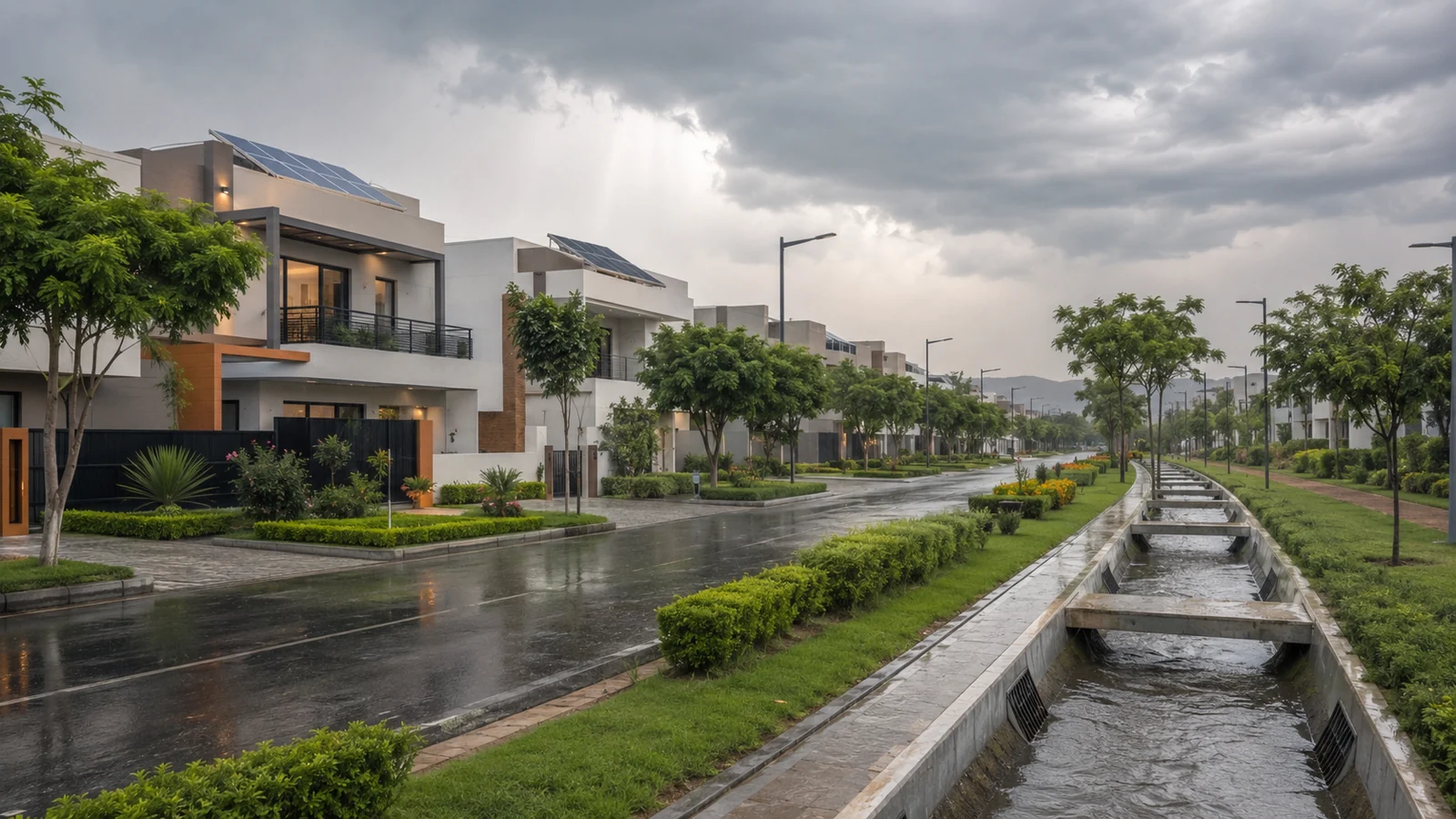
There’s often a chasm between marketing lingo and actual utility. Attractive brochures with lush parks and serene lakes mean little if these features fail to manage water effectively or reduce temperature. A truly climate-safe housing project integrates hard data with environmental engineering to ensure safety.
How Flood Risks Affect Property Value
Flooding has gone from a seasonal annoyance to a legitimate concern for property values. Events like the recent flooding in Park View City exemplify how fragile the situation can be. Buyers must consider not just the charm of a housing society’s design but how it handles stormwater and flood risks. A society that overlooks these aspects could lower its value significantly over time.
Water Supply: A Hidden Test for Property Viability
In addition to flood risks, the reliability of a water supply must be scrutinized. Societies with an unreliable water source can become tough to live in, even if other amenities seem attractive. A smart buyer asks: “What’s the plan for water supply as occupancy increases?” Rainwater harvesting and effective water management systems are critical components of eco-friendly properties.
For families or investors looking for long-term comfort, heating costs and energy efficiency are also major factors. Properties with adequate insulation, solar readiness, and thoughtful design can significantly ease the monthly electricity burden. As energy prices rise, such homes will likely become more appealing in the resale market.
Takeaway: Evaluating Eco-Friendly Features
In summary, eco-friendly properties do hold real value, but only when they’re supported by genuine planning and infrastructure. Buyers should thoroughly research: Are legal approvals in place? Is the society designed for climate resilience? How are green features integrated? Asking these questions will help ensure that your investment stands the test of time.
For anyone keen to stay updated on real estate opportunities and eco-friendly developments in Pakistan, Thaikadar (ٹھیکیدار) is a valuable resource. Connect with Pro21st for more insights and tailored advice on making informed property decisions. Happy house hunting!