
The Rising Trade Deficit in Pakistan: What You Need to Know
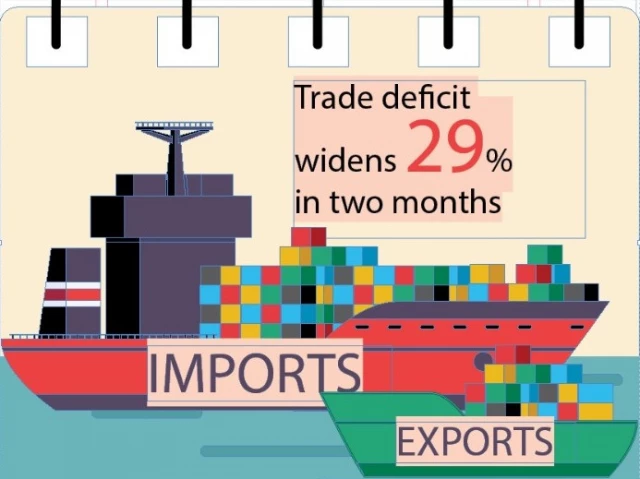
Hey there! Today, we’re diving into a topic that’s important for anyone interested in Pakistan’s economy: the widening trade deficit. Recent reports indicate that Pakistan’s trade deficit jumped 29% to a staggering $6 billion in just the first two months of this fiscal year. This change stems from stagnant exports coupled with a noticeable rise in imports. Let’s break it down.
According to the Pakistan Bureau of Statistics (PBS), the gap between what Pakistan imports and what it exports has significantly widened. During July and August, imports soared to $11.1 billion—a hefty 14.2% increase—while exports barely nudged the needle at $5.1 billion, a mere 0.7% from the same time last year. This imbalance raises crucial questions about the sustainability of the country’s economic policies.
What’s fueling this rise in imports? It seems that the government’s trade liberalization policy is starting to take shape, but not in the way many had hoped. The rupee-dollar exchange rate has been volatile, with the Pakistani rupee recently closing at Rs281.72. This fluctuation makes it tougher for exporters, who are feeling the pinch of reduced competitiveness.
Moreover, the International Monetary Fund (IMF) is looking closely at Pakistan’s economic situation as they’re in negotiations for a loan tranche later this month. With imports being double the exports, authorities are under pressure to revise their trade policies if they wish to stabilize the economy.
While past initiatives like the Uraan Pakistan project aimed to boost exports, results have been disappointing. Policymakers are indeed in a tight spot: without a significant uptick in exports, the government may find its hands tied in navigating future economic challenges. This month, for instance, exports dipped to $2.4 billion in August—a worrying 12.5% drop from a year ago.
Interestingly, the increase in imports is also reflected in tax collections, which the Federal Board of Revenue (FBR) reports have exceeded expectations. Customs duties saw a 20% growth, which highlights the economic activity spurred by rising imports.
In summary, the trade imbalance is raising alarms and urging discussions about reshaping economic strategies in Pakistan. The road ahead may be challenging, but staying informed will help us understand the implications of these changes.
If you’re keen on keeping up with economic developments in Pakistan and want guidance on navigating these complex topics, consider connecting with Pro21st. They’re committed to promoting informed discussions and insights into the economic landscape. Stay curious!
At Pro21st, we believe in sharing updates that matter.
Stay connected for more real conversations, fresh insights, and 21st-century perspectives.