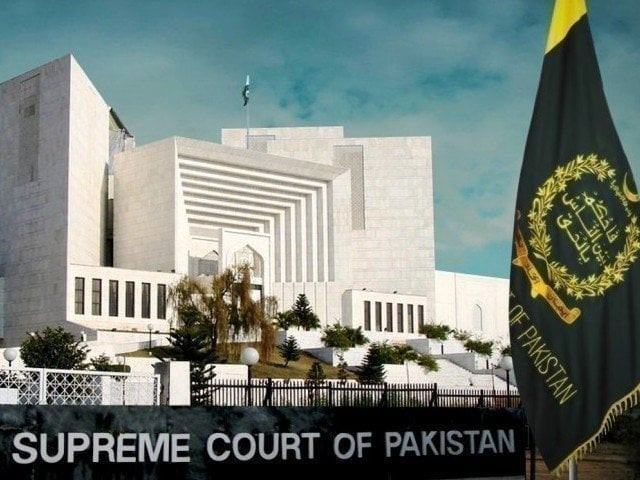

Understanding the Supreme Court’s Ruling on Proclaimed Offenders in Civil Matters
Recent headlines shed light on a landmark decision by Pakistan’s Supreme Court, clarifying the legal standing of proclaimed offenders in civil cases. In a clear and impactful ruling, the Supreme Court emphasized that being labeled as an absconder in a criminal case doesn’t automatically strip an individual of their civil rights. This judgment can be a game-changer for many caught in the crosshairs of legal complications.
Authored by Justice Syed Mansoor Ali Shah, the five-page judgment outlines that a proclaimed offender retains the right to pursue civil or service-related remedies. The decision is significant because it safeguards access to justice—a fundamental principle enshrined in Pakistan’s Constitution. Justice Shah pointed out that denying someone the right to appeal or seek remedies based solely on their status as an offender could damage public trust in the justice system.
Interestingly, the ruling also highlighted the potential for abuse if such a bar were implemented. It warned against allowing unscrupulous litigants to weaponize the law, exploiting the notion of abscondence to evade accountability or justice. This perspective adds a crucial layer of protection, ensuring that fair processes remain intact.
Moreover, the judgment makes a vital distinction between criminal liability and civil rights, stressing that the two jurisdictions should never be conflated. Individuals should not lose their civil entitlements simply because of allegations in a separate domain of the law. The court effectively reinforced that civil entitlements should be upheld unless specifically stated otherwise in a statute.
It’s worth noting that while the court cited practices from the U.S. and the UK concerning fugitives and their rights, it clearly stated these principles do not extend to civil matters in Pakistan. The ruling is a well-guarded reminder that, under the constitutional framework, access to justice should never be denied based solely on criminal allegations.
In conclusion, this decision is a breath of fresh air in the legal landscape, reinforcing the essential notion that justice should be fair, transparent, and available to all—regardless of their status in a criminal context.
For more insights on legal matters and recent rulings, connecting with platforms like Pro21st can keep you informed. Stay engaged, and let’s navigate these complex legal waters together!
At Pro21st, we believe in sharing updates that matter.
Stay connected for more real conversations, fresh insights, and 21st-century perspectives.