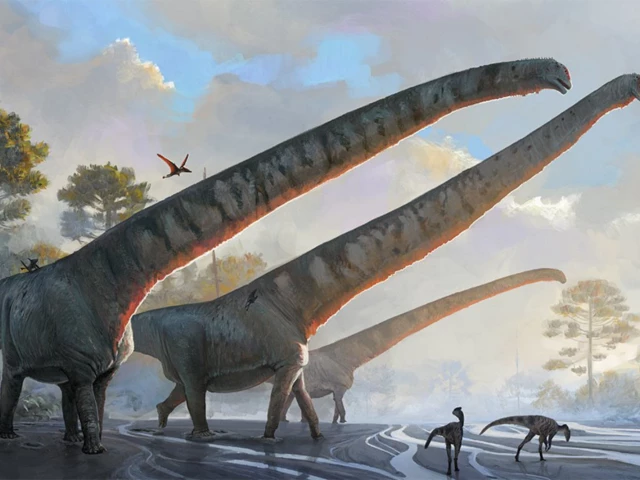

Unveiling the Mamenchisaurus sanjiangensis: A New Chapter in Dinosaur Evolution
Exciting news has emerged from the world of paleontology! Researchers recently identified a new species of sauropod dinosaur called Mamenchisaurus sanjiangensis from a partial skeleton found near Chongqing, in southwest China. This discovery shines a spotlight on sauropod evolution in East Asia, inviting us to explore the rich prehistoric tapestry of this region.
Living approximately 160 million years ago during the Early Oxfordian age of the Jurassic, M. sanjiangensis was unearthed from purplish-red mudstones in the famed Upper Shaximiao Formation. While we only have a partial skeleton to study, paleontologists have classified this dinosaur as a "diverged mamenchisaurid," linking it to others in the Mamenchisaurus genus. According to Hui Dai, the study’s lead author, this find emphasizes a peak in sauropod diversity during the Late Jurassic. At that time, numerous non-neosauropodan eusauropod lineages, like the mamenchisaurids, thrived globally, coexisting with emerging neosauropods.
One fascinating aspect of this discovery is the distinct variation in sauropod populations across different continents. The dominance of mamenchisaurids in Late Jurassic Asian fossils sets them apart from sauropod findings in Europe and the Americas. This suggests that Asia—especially southwestern China—was a hotspot for sauropod diversity during this period.
M. sanjiangensis not only enriches our understanding of early-diverging sauropods but also provides vital information for reconstructing the evolutionary history of Jurassic-era eusauropods in East Asia. However, it’s important to note that significant gaps remain in the fossil record, and researchers are eager for new discoveries. Further analysis of existing specimens could unravel the mysteries surrounding early sauropod evolution across ancient continents.
If you’re fascinated by the world of dinosaurs and want to stay updated on the latest findings, consider connecting with us at Pro21st. We are committed to bringing you the latest in scientific discoveries and discussions that expand our horizons about the past and its relevance to our present and future. Stay curious, and keep exploring!