
A Clear Divide: Love for Pakistan vs. Love for Imran
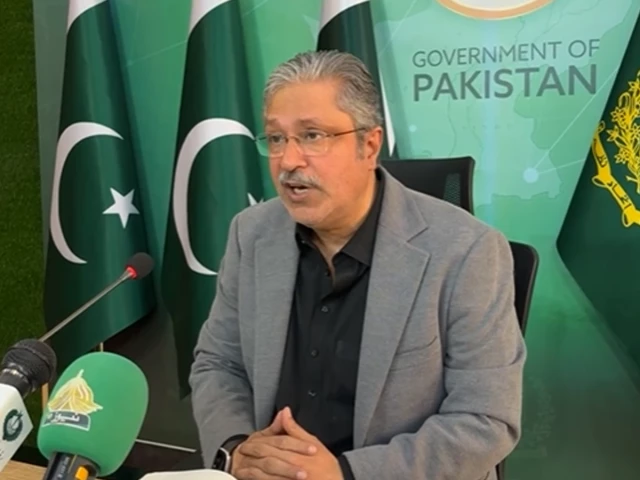
In a recent press conference, Ikhtiyar Wali Khan, the Prime Minister’s Coordinator for Information and Khyber-Pakhtunkhwa Affairs, marked a significant moment in Pakistan’s political landscape. He announced that the government has drawn a clear distinction between “love for Pakistan” and “love for Imran Khan.” This declaration comes amidst growing tensions between the government and the Pakistan Tehreek-e-Insaf (PTI) party, recently led by its founder, Imran Khan.
Khan expressed strong criticism of the PTI, suggesting that the party has been engaging in activities aimed at destabilizing the country. From protesting to trailing questionable tactics, the PTI appears to be at the center of a political storm. Wali Khan emphasized that the party, rather than being a force for good, has unfortunately resorted to strategies that fuel unrest and chaos.
He didn’t hold back in addressing the PTI’s governance record, citing a lack of significant development initiatives in Khyber-Pakhtunkhwa over the past 13 years. Questions about incomplete projects and governance failures have left many citizens disillusioned. For Khan, it’s not just about politics; it’s about the welfare of the people who expect tangible progress.
Moreover, Wali Khan accused the PTI of exploiting religious sentiments and, alarmingly, likened the party to terrorist organizations for their repeated assaults on state institutions, including the military and the judiciary. This rhetoric is a potent reminder of how political discourse can quickly escalate, emphasizing the fragile nature of trust in government.
The Prime Minister’s Coordinator made it clear that routes for dialogue with Imran Khan are officially closed. Instead, he warned that authorities are considering relocating Imran Khan from Adiala Jail as a precaution to maintain public order. This shift in strategy might signal a significant turnaround, revealing how the situation has escalated.
As the situation unfolds, residents in areas like Rawalpindi and Adiala are voicing their frustrations over PTI’s protests, which they claim disrupt everyday life. For many, the challenges faced—like school kids being delayed by roadblocks—are more than just political issues; they affect their daily routines and quality of life.
This divide underscores a broader question: How do we prioritize national interests over individual loyalty? This is especially pertinent for people feeling the pinch from ongoing unrest. It’s an ongoing dialogue that invites participation and reflection from all sides.
Navigating these turbulent waters demands informed discourse and collective action. For those seeking more insights or a deeper understanding of these complex dynamics, staying connected with platforms that promote constructive dialogue, like Pro21st, can provide valuable perspectives. Let’s engage in discussion that emphasizes unity and progress for Pakistan!
At Pro21st, we believe in sharing updates that matter.
Stay connected for more real conversations, fresh insights, and 21st-century perspectives.