
The Karachi University Degree Controversy: What You Need to Know
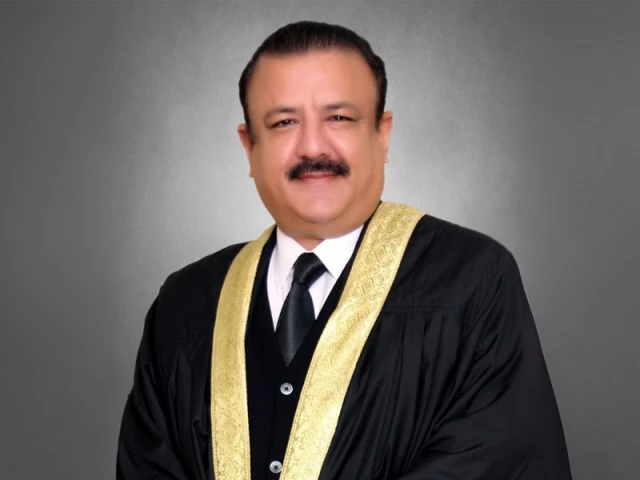
The recent controversy surrounding Justice Tariq Mehmood Jahangiri’s degree has sparked significant debate and concern. The Islamabad High Court is currently examining the details, and the Higher Education Commission (HEC) has made its stance clear. They emphasize that they hold no administrative sway over universities and that this issue is fundamentally between Karachi University and the concerned parties.
According to the HEC’s latest report, Justice Jahangiri’s degree was never presented for verification, which raises eyebrows. It appears that the commission solely acts as a regulatory body and does not issue or validate degrees like the ones in question. This distinction is crucial because it places the onus entirely on the universities to manage their academic integrity.
Karachi University has been proactive in its defense, outlining specifics as to why Justice Jahangiri’s degree was cancelled. They have cited a 1989 decision by the Unfair Means Committee, which banned him for three years due to cheating and threatening an examiner. As per the regulations of that time, he was eligible to retake his exams post-ban.
However, the real kicker comes with the claims surrounding his degree. Karachi University asserts that Jahangiri used a forged 1990 enrolment form to claim his degree, which included a fake stamp from Government Islamia College. To complicate matters further, the enrolment number on his degree actually belonged to another student, leading to questions about the authenticity of the degree as well as the procedures followed.
On May 23, 2024, a citizen named Irfan Mazhar sought verification of Justice Jahangiri’s degree. The university’s Controller of Examination confirmed the degree’s invalidity, stating that dual enrolments are impossible, and thus, the documents presented were fraudulent. Their findings were corroborated when the principal of Islamia College confirmed that the justice was never enrolled between 1984 and 1991.
This unfolding situation raises critical questions about the responsibility of educational institutions in maintaining their integrity. With the scrutiny of the HEC and the Islamabad High Court, one can hope this will lead to stronger regulations in higher education.
As we follow the developments in this case, it’s a solid reminder of how important transparency and accountability are in education. If you’re interested in staying updated on similar topics or exploring more about higher education issues, consider connecting with Pro21st for insights, news, and discussions that matter.
Navigating through complexities like these emphasizes the need for robust policies and a commitment to integrity in academia.
At Pro21st, we believe in sharing updates that matter.
Stay connected for more real conversations, fresh insights, and 21st-century perspectives.