
Shocking Developments in Islamabad’s Judiciary: What It Means for Justice
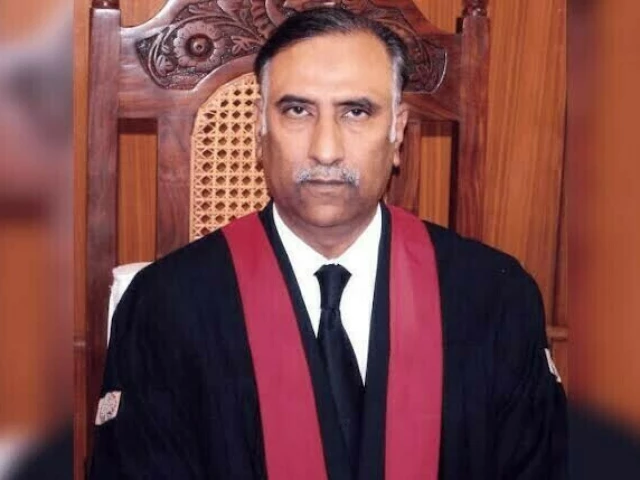
In a surprising turn of events, the Islamabad High Court (IHC) is ablaze with debate following the exclusion of Justice Tariq Mehmood Jahangiri from the court’s roster for three days. The legal community is buzzing, and not in a good way. A division bench led by Chief Justice Sarfraz Dogar has yet to release a written order explaining this unusual decision, leaving everyone questioning its implications.
Reports suggest that Justice Jahangiri has effectively been kept from his judicial duties, which raises eyebrows. Legal experts are wary, stating that such a move against a superior court judge could lead to chaos within the judiciary. Salahuddin Ahmed, a former president of the Sindh High Court Bar Association, labeled this action as "blatant" and "illegal," raising concerns about potential biases at play.
What adds fuel to the fire is that Justice Jahangiri previously filed a petition against Chief Justice Dogar’s transfer to the IHC. Ahmed points out that judicial ethics dictate Chief Justice Dogar shouldn’t participate in cases involving a judge he has a conflict with. This has many legal minds questioning not just the motives but the legal foundation of this stunning decision. The Supreme Court previously ruled that one bench cannot entertain petitions against another bench, which, according to legal experts, has clearly been overlooked.
Faisal Siddiqi, another prominent advocate, likened this development to the military ruler General Pervez Musharraf’s controversial suspension of former Chief Justice Iftikhar Chaudhry. He warns that if this behavior continues, it could plunge the judiciary into deeper anarchy, emphasizing that Chief Justice Yahya Afridi must step in to restore order.
Opinions from various legal professionals underline the consensus: this act not only violates constitutional norms but also threatens the very fabric of judicial independence. Abdul Moiz Jaferi, echoing this sentiment, commented on the ongoing challenges they face in the Sindh High Court, illustrating how this situation isn’t an isolated incident but part of a larger struggle for fairness and justice.
Given these complex dynamics, the next few days will be critical in shaping the future of the IHC. The legal community is keenly awaiting the written order, as its consequences could very well affect several ongoing cases and the overall trust in the judicial system.
This pivotal moment in Islamabad’s judiciary calls for awareness and scrutiny from the public and legal stakeholders alike. If you’re interested in legal updates and insights, consider connecting with us at Pro21st. Let’s stay informed and engaged!
At Pro21st, we believe in sharing updates that matter.
Stay connected for more real conversations, fresh insights, and 21st-century perspectives.