
Ongoing Legal Drama: What’s Happening with Justice Tariq Mehmood Jahangiri?
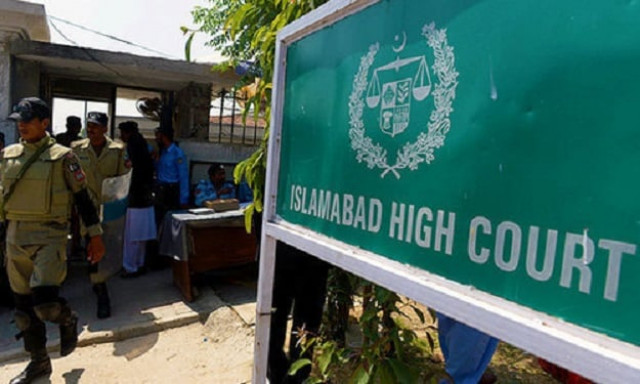
In the bustling, often dramatic world of legal proceedings, recent events surrounding Justice Tariq Mehmood Jahangiri of the Islamabad High Court (IHC) have caught everyone’s attention. The latest twist? A newly formed bench that was supposed to address allegations regarding Jahangiri’s LLB degree has been dissolved. This saga has unfolded in a series of unexpected steps that have implications not only for the judge in question but also for the integrity of the legal system.
Background of the Case
On September 16, a division bench, led by Chief Justice Sardar Muhammad Sarfraz Dogar and Justice Muhammad Azam Khan, had halted Justice Jahangiri from performing his duties following a petition filed by Mian Dawood Advocate. This marked a significant turn in the scrutiny surrounding his qualifications. Allegations claim that his degree from the University of Karachi is dubious, with the syndicate of the university having already canceled it last year.
Things took an interesting turn when the Supreme Court intervened on September 30, overturning the earlier decision that had put Jahangiri on hold. That should have paved the way for clarity, but legal dramas often come with their own set of complications.
The Shift in the Bench
The reconstitution of the bench saw Justice Khadim Hussian Soomro stepping in to replace Justice Muhammad Azam Khan. However, this arrangement didn’t last long. On a recent Tuesday, when the bench was set to consider a plea from the Islamabad District Bar Association to join the case, Justice Soomro recused himself for personal reasons, leading to yet another dissolution.
This ongoing reshuffling raises questions about the stability and transparency of the judicial process, not just for the immediate parties involved but for the public’s confidence in the system as a whole.
The University’s Stance
In a noteworthy development, the University of Karachi had previously issued a notification affirming that Justice Jahangiri was found guilty of using unfair means to acquire his degree. This scandal dates back to the late 80s, when he was reportedly barred from further academic pursuits for three years due to violations. Despite the university’s stance, the Sindh High Court took action on October 3, suspending the notification that invalidated his degree. This back-and-forth demonstrates the complex nature of legal interpretations and institutional power.
Looking Ahead
As the Islamabad High Court prepares for its next steps, many are left wondering: What will be the fate of Justice Jahangiri? Will the case spark wider discussions about the vetting process for legal professionals in Pakistan? These unresolved questions underscore the importance of accountability within the legal system.
This situation serves as a reminder of the intricate dance between law and ethics, where every new development can shift perspective and provoke debate. If you’re interested in staying updated on these unfolding events and understanding the broader implications for the legal landscape, consider connecting with us at Pro21st. Together, we can navigate the complexities of today’s legal world.
At Pro21st, we believe in sharing updates that matter.
Stay connected for more real conversations, fresh insights, and 21st-century perspectives.