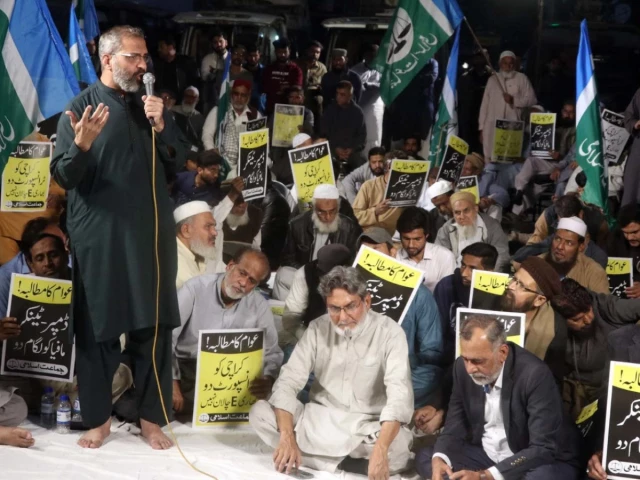

Karachi’s Crisis: Jamaat-e-Islami Protests Against Rising Lawlessness
Karachi, one of the largest cities in Pakistan, has become a battleground against rising lawlessness, and local residents have had enough. The Jamaat-e-Islami (JI) party recently organized sit-ins at 13 major locations across the city to protest against the deaths caused by heavy traffic, rampant street crime, and hazardous manholes. With demonstrators waving placards and chanting slogans, the mood was one of urgency and frustration.
During a press conference held at Idara Noor-e-Haq, JI Karachi Ameer Monem Zafar Khan highlighted alarming statistics: 254 people lost their lives this year due to traffic incidents, while others fell victim to street crimes, with 25 fatalities attributed to armed robbers. The issue of citizens tragically falling into open manholes further adds to the city’s grim safety record, with 24 lives lost, including innocent children.
Zafar Khan didn’t hold back in his criticism of the Pakistan Peoples Party (PPP) government in Sindh, attributing the city’s chaos to years of corruption and mismanagement. He remarked, “Despite the situation, the Sindh government seems more interested in issuing e-challans than addressing these critical issues.”
The grievances expressed during the protests are grounded in reality. Residents are demanding better protection from street criminals, relief from relentless extortion within the business community, and a restoration of Karachi’s crumbling infrastructure. Additionally, the anger against land grabbers is palpable; many believe that such illicit activities couldn’t thrive without state support.
While the local government touts technological advancements like surveillance cameras and drones, demonstrators question their effectiveness. Instead of capturing criminals, these tools often just churn out e-challans for traffic violations. "Karachi requires 15,000 buses to meet its transit demands, yet only a mere 400 have been introduced in 17 years," Zafar Khan pointed out, emphasizing the dire need for better public transport.
The protesters gathered at key locations—Kala Board National Highway, Tibet Centre, Dawood Chowrangi, and more—sending a clear message: enough is enough. Their demands are straightforward yet powerful: protect the citizens, regulate heavy traffic, and restore the city’s infrastructure.
As Karachi continues to grapple with these pressing issues, it’s imperative for citizens to come together and advocate for meaningful change. If you’re passionate about Karachi’s future and want to explore ways to contribute, connecting with organizations like Pro21st can be a step in the right direction. It’s time for Karachi to reclaim its vibrancy and safety—together, we can make it happen.
At Pro21st, we believe in sharing updates that matter.
Stay connected for more real conversations, fresh insights, and 21st-century perspectives.