
The Future of AI: A Groundbreaking Leap with Light-Powered Chips
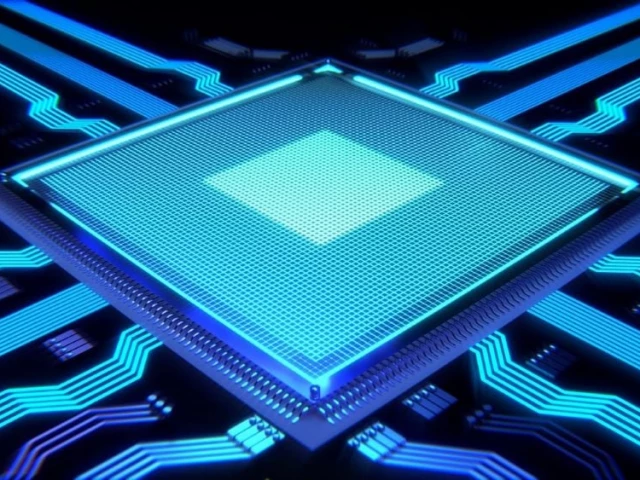
Artificial intelligence (AI) is evolving at lightning speed, and a recent breakthrough could push it even further. Researchers in the United States have developed an innovative computer chip that harnesses the power of light instead of electricity. Imagine AI calculations that are between 10 to 100 times more energy-efficient than the best chips we use today—that’s the exciting promise of this new technology.
The Challenge of Energy Consumption
One of the core challenges in machine learning is convolution, a process that enables AI to recognize patterns in images, videos, and text. Unfortunately, this process can drain a significant amount of electrical power when run on conventional chips. However, the new design flips that notion on its head. Engineers have integrated lasers and microscopic lenses directly onto circuit boards, resulting in a more efficient system.
In tests, this prototype matched the accuracy of existing electronic chips—achieving an impressive 98% success rate in recognizing handwritten digits—all while consuming only a fraction of the energy. Hangbo Yang, a research associate professor at the University of Florida and a co-author of the study, said it best: “This is the first time anyone has put this type of optical computation on a chip and applied it to an AI neural network.”
How It Works
So, how does this futuristic chip function? It uses ultra-thin Fresnel lenses—miniature lenses that are only a fraction of a human hair wide. Data is transformed into laser light on the chip, passes through the lenses, and is converted back into digital signals. This process not only conserves energy but also allows for multiple data streams to be processed simultaneously through a method called wavelength multiplexing. Essentially, different colors of lasers can work together in harmony, massively improving efficiency.
Implications for the Industry
The implications of this are enormous for industries reliant on AI. Chipmakers, including giants like NVIDIA, are already utilizing optical components in some aspects of their hardware. Lead researcher Volker J. Sorger believes that convolution lenses could soon be integrated into daily products, bringing us closer to a new era of AI capabilities. “In the near future, chip-based optics will become a key part of every AI chip we use daily,” he stated.
Looking Ahead
As we progress further into the era of AI, energy efficiency will be paramount. Researchers believe that performing essential machine learning calculations with minimal energy will be vital for the scalability of AI technologies in the years to come. This light-powered chip is more than just a technological innovation; it represents a crucial step toward a more sustainable and capable future for artificial intelligence.
If you’re intrigued by the intersection of technology and sustainability—or simply want to keep up with how innovations like these could impact our lives—consider connecting with us at Pro21st. We’re here to explore these advancements and more!