
—
### Tiny Robots: A Leap into the Future of Medicine
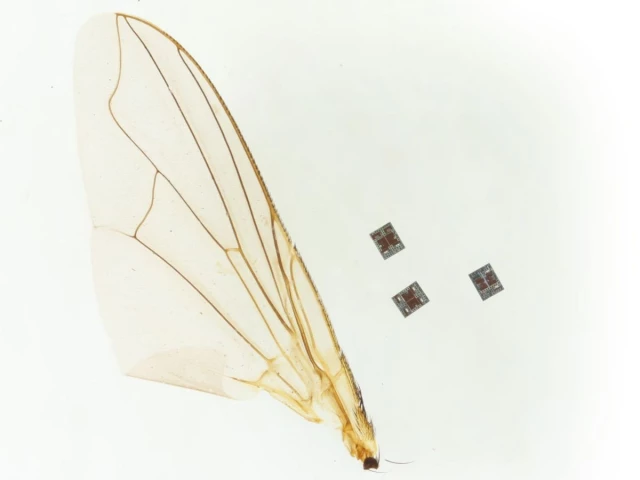
Imagine a robot smaller than a grain of salt, capable of sensing, thinking, and acting all on its own. Sounds like something out of a sci-fi movie, right? Well, scientists from the University of Michigan and the University of Pennsylvania have made this remarkable innovation a reality, tackling an engineering puzzle that’s stumped researchers for over 40 years!
At the core of this teeny marvel is a 55-nanometer computer and highly-sensitive temperature sensors, accurate to within 0.3 degrees Celsius. And let’s not forget those tiny motors that enable movement in liquid using platinum electrodes. It’s mind-blowing how much technology they’ve packed into something so small!
This little robot is powered by miniature solar cells and encased in a durable glass-like coating, making it capable of operating independently without needing external control. Lead researcher Marc Miskin proudly states that this is the first tiny robot to be able to “sense, think, and act,” and with its capabilities, it’s hard to disagree.
So, what makes this tiny technological marvel so important? Researchers believe it could transform medicine as we know it. Imagine targeted drug delivery that goes right to the source, repairing damaged nerves, or even monitoring cell health in real time. While we might still be in the experimental phase, experts say practical applications could emerge within the next decade.
However, like any innovation, there are challenges to tackle. The robots need to be biocompatible and functional in various environments, from saltwater to dry land. Plus, researchers are eyeing the possibility of creating swarms of these micro-robots that can communicate and work together. This could revolutionize surgical procedures in the future, opening the door for tiny robots to potentially replace human surgeons—though we’ve still got some regulatory and technological hurdles to jump over first.
And here’s the amazing part: these futuristic robots don’t require complex equipment to operate. In fact, high school students have been able to control them using just a $10 microscope! This accessibility could pave the way for the next generation of innovators to dive into robotics.
As we look ahead to a future where tiny robots could play a significant role in healthcare, it’s clear that the collaboration between institutions like the University of Michigan and the University of Pennsylvania is pushing the boundaries of what we thought was possible. If you find this topic fascinating, there’s so much more to explore about robotics and its potential impact on our lives — consider connecting with platforms like Pro21st to stay updated on these exciting advancements!
—
This blend of scientific innovation and practical application makes for a thrilling conversation starter. Let’s keep an eye on the horizon because the future of medicine is looking rather intriguing!