
Will US Safety Rules Hinder Tesla’s Cybercab Rollout?
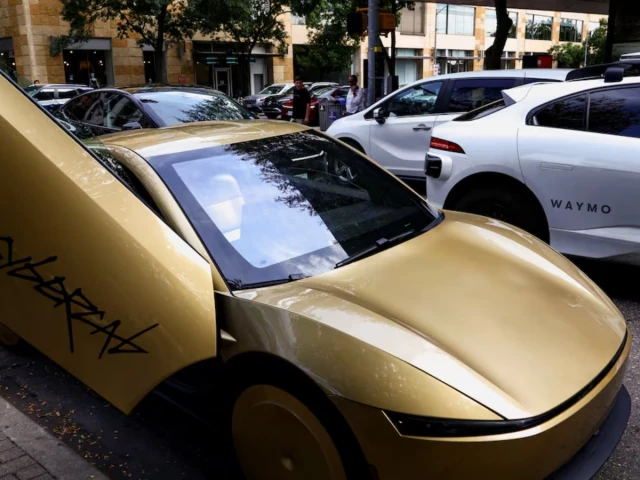
Tesla is at the forefront of innovation with its new Cybercab, a robotaxi that comes without traditional controls like a steering wheel or pedals. While the excitement in the air is palpable—especially after a recent event in downtown Austin, Texas—there’s a cloud of regulatory scrutiny hanging overhead. The National Highway Traffic Safety Administration (NHTSA) has launched an audit on about 1,000 Cybercab vehicles to investigate how Tesla ensures compliance with federal safety regulations.
The challenge lies in the fact that US regulations, crafted for human-driven cars, limit the deployment of vehicles that don’t meet decades-old standards. Yet, experts believe there are regulatory gray areas that might allow Tesla to push the envelope. Elon Musk, known for his unconventional approach, could point to these gaps to accelerate the Cybercab’s entry into the market, despite the risks involved.
Interestingly, unlike many other countries, the US allows auto manufacturers to self-certify their vehicles for safety standards. This means Tesla might be able to roll out its Cybercabs without waiting for formal regulatory approval—an approach that has historically worked for the company. But skepticism remains, especially from safety advocates who argue that the Cybercab cannot meet existing safety requirements.
While Musk envisions a future flooded with Cybercabs available for less than $30,000, the path to public roads isn’t without hurdles. Safety experts question whether Tesla’s Full Self-Driving software is truly reliable enough to operate autonomously. Although the company claims it’s significantly safer than human drivers, some former employees reveal concerns about the technology’s limitations.
The NHTSA does provide a pathway for exemptions, but deployment would typically be capped at 2,500 vehicles annually. Interestingly, Tesla may not be subject to this cap, hinting at a self-certification route that could sidestep restrictions. However, history shows that self-certification can be a double-edged sword; take Amazon’s Zoox, for instance. After trying the same route and drawing the ire of the NHTSA, it took Zoox nearly a year to secure federal approval.
As the Cybercab inches closer to broad deployment, it’s clear that both Tesla and regulatory bodies must navigate this complex landscape thoughtfully. The intersection of innovation, safety, and regulation will shape the future of transportation in the US. So if you’re as fascinated by these developments as the rest of us, perhaps it’s time to connect with a community that dives deep into these topics, like Pro21st.