
NASA’s Artemis II: A Historic Leap Toward Lunar Exploration
Exciting times are ahead as NASA takes yet another groundbreaking step toward returning humans to the Moon! Just recently, four astronauts blasted off from Florida on the Artemis II mission, a pivotal journey that aims to orbit the Moon and set the stage for future lunar exploration. This mission marks a significant milestone in the Artemis program, which is designed to establish a sustainable human presence on the Moon.
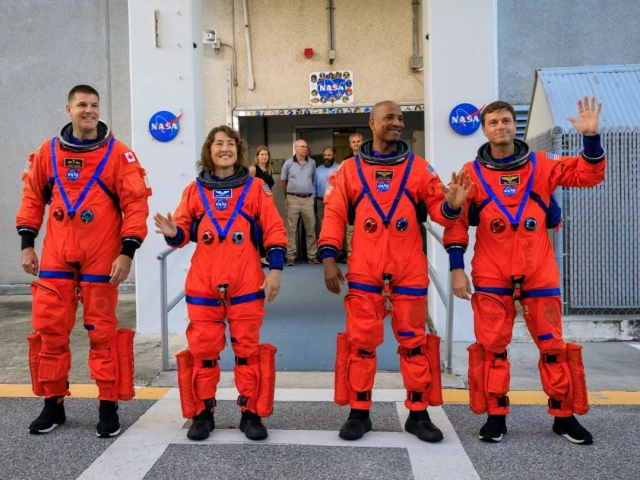
The crew comprises three NASA astronauts—Reid Wiseman, Victor Glover, and Christina Koch—and Canadian Space Agency astronaut Jeremy Hansen. Their mission will last approximately ten days, during which they will travel around the Moon, venturing farther into space than any humans have gone in over half a century.
NASA Administrator Jared Isaacman called the launch "an opening act" for subsequent missions, including plans for a moon base. This base could play a crucial role in nurturing a consistent human presence on our lunar neighbor. If all goes as planned, the Artemis program aims to land astronauts on the Moon’s South Pole by 2028, outpacing China’s intended crewed expedition.
What makes this mission even more astonishing is that it marks the first time astronauts will venture beyond Earth’s orbit in over 53 years. The last crewed Moon landing occurred during the Apollo 17 mission in 1972. The anticipation surrounding Artemis II is palpable, especially since it serves as a crucial benchmark in NASA’s vision to explore Mars in the future.
Minutes before liftoff, Hansen expressed his commitment, saying, "This is Jeremy, we are going for all humanity." Such sentiment emphasizes the collaborative effort behind this multifaceted mission, which involves talents from around the globe. NASA’s Artemis program represents a collective aspiration for humankind, with partners not just from the U.S. but also countries across the world.
In the days to come, the astronauts will not only conduct scientific experiments but also test critical spacecraft maneuvers. For instance, they will practice manual controls to ensure they can steer the Orion capsule if automatic systems ever fail.
While challenges loom—such as the rising costs of each launch, estimated between $2 billion and $4 billion—the success of Artemis II could reignite enthusiasm and investment in space exploration. After all, this is about more than just technology; it’s about pushing the boundaries of what we believe humanity can achieve together.
As we embark on this exciting journey back to the Moon, there’s so much to look forward to. Wanna keep up to date on future missions or get involved? For anyone curious about the intersection of technology and space exploration, connecting with organizations like Pro21st can be an enriching experience. Let’s keep our eyes on the stars!