
The Rising Tensions of Political Discourse in New Zealand
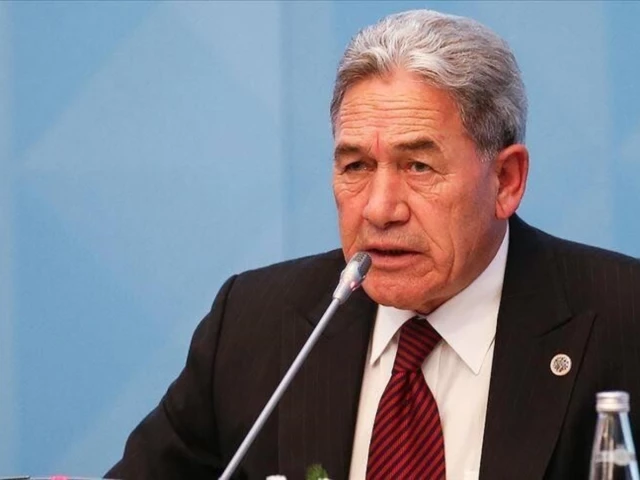
Recently, a heated exchange in New Zealand’s political arena has put the spotlight on issues of immigration, identity, and free speech. Foreign Minister Winston Peters, known for his populist stance, found himself embroiled in controversy after directing a rather harsh comment towards Chinese-born Green Party member Lawrence Xu-Nan during a discussion about COVID-19 vaccinations.
The incident unfolded when Xu-Nan asked Peters a straightforward question about his vaccination status. Responding with a dismissive quip, Peters suggested that Xu-Nan “go back to your own country.” This comment not only sparked outrage on social media but also prompted an official complaint from the Chinese Embassy in New Zealand. Ambassador Wang Xiaolong remarked that such statements often reflect more about the person making them than about the subject at hand.
This incident strikes at the heart of a broader debate about immigration and the treatment of ethnic minorities in New Zealand. Peters’ past comments, including a controversial remark about a "butter chicken tsunami" in relation to trade with India, underline a pattern of rhetoric that many have deemed inappropriate. With New Zealand’s Prime Minister Christopher Luxon calling Peters’ comments “inappropriate attention-seeking,” it’s clear that this kind of discourse is becoming increasingly divisive.
Critics argue that Peters’ sentiments are not only harmful but also undermine the multicultural essence of New Zealand, a nation built on diverse backgrounds and perspectives. While Peters defends his right to free speech, dismissing his critics as “pearl clutchers” and “communist shills,” many are questioning whether such language has a place in a civil society.
As New Zealand navigates its identity in a globalized world, these discussions are crucial. They force us to confront uncomfortable truths about where we draw the line between free expression and respect for all citizens, regardless of their origins.
For those interested in engaging further in political discussions or seeking resources related to citizenship and community engagement, platforms like Pro21st can offer valuable insights. It’s essential to underline that standing up for inclusivity and respectful dialogue can pave the way for a healthier political landscape.