
The Call for Resistance: Voices from the National Conference on Constitutional Rights in Pakistan
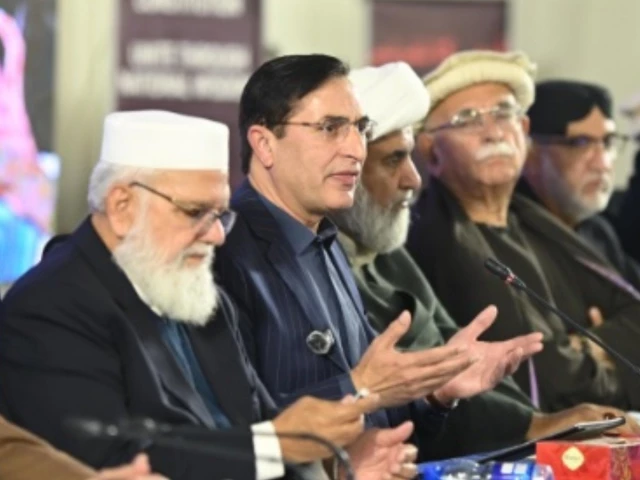
In a recent gathering under the banner of Tehreek Tahaffuz-e-Aain Pakistan, significant voices converged to address pressing political and legal issues in Pakistan. Held in Khyber-Pakhtunkhwa House, this national conference brought together members from various political factions, legal experts, journalists, and civil society activists. The dominant sentiment? A resounding call for resistance over reconciliation as the nation grapples with what many describe as a marginalization of its judiciary and democratic institutions.
Legal professionals voiced their concerns over recent constitutional amendments, alleging that they are systematically undermining the judiciary. Meanwhile, journalists pointed fingers at restrictive laws such as the PECA Act, which many argue stifles free speech and endangers press freedoms. The atmosphere was charged, with a collective consensus that the establishment’s role must be scrutinized, urging the Pakistan Tehreek-e-Insaf (PTI) party to adopt a path of firm resistance.
Barrister Gohar Khan, PTI Chairman, did not pull any punches as he described the legal challenges faced by party leaders Imran Khan and Bushra Bibi as a "murder of justice." He insisted that these punitive measures are not just an assault on individual leaders but a betrayal of democratic principles that resonate with the wider populace. His remarks emphasize the idea that the continued imprisonment of leaders reflects a broader crisis of democracy in Pakistan.
Moreover, prominent voices like Tehreek Tahaffuz-e-Aain Pakistan chief Mahmood Khan Achakzai urged political factions to put differences aside for the sake of national unity. He believed that democratic dialogue remains vital, asserting that all parties should respect the electorate’s mandate and recognize the election outcomes to strengthen democratic processes.
As the conference progressed, it became evident that there’s a growing urgency among Pakistani citizens to reclaim their rights. PTI Secretary General Salman Akram Raja articulated a pivotal shift, indicating that this is no longer just about party politics but about a collective struggle against systemic injustice.
The poignant dialogue at this conference reflects a society at a crossroads, where the thoughts of resistance resonate strongly in the face of adversity. Understanding this discourse is vital for anyone interested in the political landscape of Pakistan today.
If you want to delve deeper into these issues or connect with others who share your concerns about constitutional rights and democracy in Pakistan, consider engaging with platforms like Pro21st. They provide resources and discussions that can help you stay informed and involved in these essential conversations. Together, we can work toward a brighter, democratic future for Pakistan.
At Pro21st, we believe in sharing updates that matter.
Stay connected for more real conversations, fresh insights, and 21st-century perspectives.