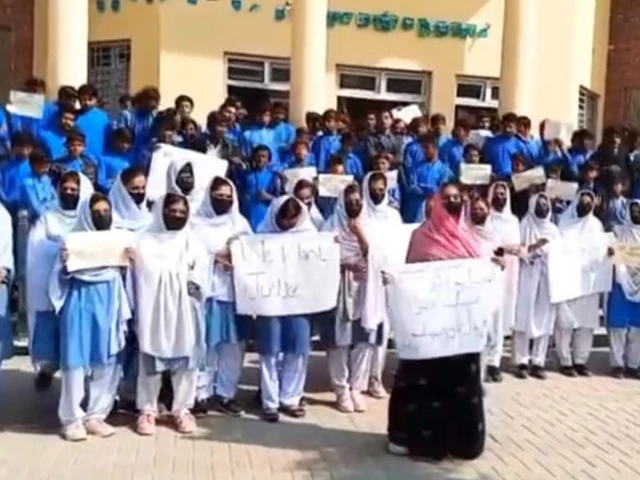

Students Rally for Change: Protests Erupt Over Exam Results in Sindh
In recent days, students from the Sanghar, Shahdadpur, Shahpur Chakar, and Sakrand districts have taken to the streets in protest against the Class XI results announced by the Board of Intermediate and Secondary Education Shaheed Benazirabad (BISESBA). Their grievances center around accusations of mismanagement, manipulation, and even corruption within the board, sparking discussions that are difficult to ignore.
After implementing an e-marking system, which BISESBA Chairman Dr. Asif Ali Memon touted as a "major achievement," the results have not gone over well with students. Many of them feel that the automated system, with its minimal human oversight, has led to inaccurate assessments of their capabilities.
Students from Pir Syed Sabghatullah Shah Shaheed Government Degree College voiced their frustrations openly. Their protests, led by individuals like Abdul Jabbar Mari and Farhan Laghari, emphasized a particular sentiment: despite showing proficiency in college tests, the results did not reflect their efforts. With many claiming that the board’s incompetence jeopardized their futures, calls for accountability echoed throughout the protests.
Skepticism regarding transparency has been magnified by whispers of corruption within the board, with students alleging that bribery has transformed into a business model. "They are experimenting at our expense," said one student during a demonstration—highlighting a mixture of anger and desperation among his peers. The situation escalated as students demanded the removal of the chairman and controller for fair re-evaluation of their papers.
Similar scenes unfolded in Shahdadpur, where groups from Govt Boys Degree College rallied outside the press club, asserting that even the most meritorious students had fallen victim to what they described as large-scale tampering. Their chants resonated with a simple yet desperate demand for justice—an attempt to restore faith in a system that they believe has failed them.
The protests extended to Sakrand, gathering support from hundreds of students who felt the weight of what they termed unfair assessments. Walking from their college to Sahafi Chowk, they insisted on rechecking the results, fearing that the low grades could set their academic journeys back by a year.
In Shahpur Chakar, the narrative remained consistent—students condemned the board for awarding low scores, which they felt was a direct attack on their aspirations for higher education. Their voices combined into a rallying cry, reaching out to government officials for intervention and transparency.
Support from civil society and educationists has illuminated the students’ plight, labeling their demands as justified and essential for needed reforms. As these protests continue to gain traction, they serve as a stark reminder of how educational institutions must prioritize the needs of their students.
As this situation unfolds, it could be beneficial to stay informed and connected to broader educational resources. Platforms like Pro21st provide crucial insights and engage with communities that resonate with these ongoing challenges. By fostering dialogue, we can contribute to meaningful changes in the educational landscape.
At Pro21st, we believe in sharing updates that matter.
Stay connected for more real conversations, fresh insights, and 21st-century perspectives.