
The Impact of Misinformation: Pakistan’s Recent Experience
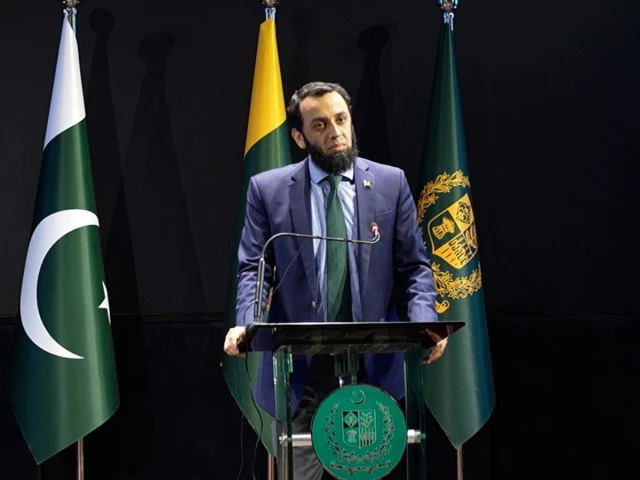
In today’s fast-paced news environment, misinformation can spread like wildfire, and the repercussions can be severe. Recently, during a press conference on December 17, 2025, Pakistan’s Information Minister Attaullah Tarar shared a troubling instance of how false narratives can affect an entire nation.
The backdrop? A tragic shooting incident at Australia’s Bondi Beach, which claimed 15 lives. In the aftermath, various media outlets, particularly in India and Israel, alleged that one of the attackers was of Pakistani origin. These claims were circulated widely without sufficient verification, leading to panic and distress, especially for a Pakistani-Australian man named Naveed Akram, who found himself falsely identified as the attacker. Akram, in his own words, described the emotional toll of being wrongfully linked to such a horrific event, saying, “I am stressed and scared and cannot even step outside safely.”
Minister Tarar pointed out that despite the frenzy of news coverage, subsequent investigations revealed that the attackers were linked to India, dispelling any claims connecting them to Pakistan. He showed how crucial it is to rely on verified facts before jumping to conclusions. “There was not a shred of evidence linking Pakistan to the incident," he emphasized, highlighting that credible journalism should always prioritize accuracy over sensationalism.
The timing of this misinformation campaign was particularly poignant, coinciding with Pakistan’s commemoration of the APS Peshawar martyrs. This moment not only served as a reminder of the country’s long-standing fight against terrorism but also deepened the emotional impact of the false reports.
Minister Tarar made a strong appeal for accountability, urging international media to issue apologies for the unverified claims. “An apology would be nice,” he stated, underscoring the importance of rectifying misinformation as part of journalistic ethics. He also shared that Pakistan’s embassies worldwide were equipped with accurate information to assist their expatriate communities in the wake of the distress caused by the false reports.
In a world where news can spread rapidly, the necessity for diligence in reporting is greater than ever. This incident serves as a critical reminder of the potential harm that misinformation can wreak. It’s essential for media outlets to adhere to ethical standards to foster a more informed global community.
For deeper insights into media ethics and staying informed, consider connecting with Pro21st. We aim to empower readers with knowledge and clarity in today’s complex information landscape.
At Pro21st, we believe in sharing updates that matter.
Stay connected for more real conversations, fresh insights, and 21st-century perspectives.