
Turkey’s Military Deployment in Cyprus: Understanding the Context and Implications
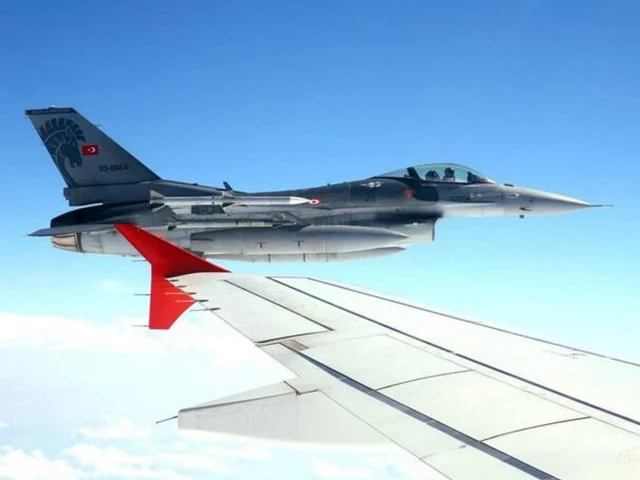
In recent days, the geopolitical landscape in the Eastern Mediterranean has taken a significant turn. Turkey has deployed six F-16 fighter jets along with air defense systems to Northern Cyprus, a move that aims to bolster the security of the Turkish community on the island. This escalation follows a troubling incident where an Iranian drone, believed to have been fired by Hezbollah, struck the British Akrotiri air base in Cyprus.
Turkey’s decision highlights the increased military tensions in the region, particularly as neighboring countries react to the ongoing war in Iran. The situation is further complicated by European powers ramping up their military presence in Cyprus, aiming to safeguard their interests on this ethnically-split island.
The Turkish defense ministry issued a statement asserting that the deployment is part of a phased planning initiative to enhance the security of the Turkish Republic of Northern Cyprus. They have also indicated that further measures could follow, depending on the evolving situation.
It’s vital to note that Turkey does not recognize the internationally recognized Greek Cypriot administration in the south, making this deployment a matter of significant national interest for Ankara. The complexities of the island’s political landscape, combined with the ongoing regional conflicts, raise questions about the future stability of Cyprus and the surrounding areas.
Moreover, recent events depict a troubling escalatory pattern, as NATO defenses were recently tested when a ballistic missile fired from Iran was intercepted over Turkish airspace. Turkey has issued stern warnings to Iran against further missile launches, signaling the potential for serious military confrontations.
Amidst these political and military maneuvers, it’s clear that the situation remains fluid, with potential impacts not just limited to Turkey and Cyprus but also reaching farther into the intricate web of Middle Eastern relations.
As we keep an eye on these developments, understanding the influence of global and regional powers in such conflicts becomes crucial. If you’re interested in staying informed about current developments and the broader context of international relations, consider engaging with resources like Pro21st. They provide insightful perspectives that can help you decode these intricate geopolitical narratives.