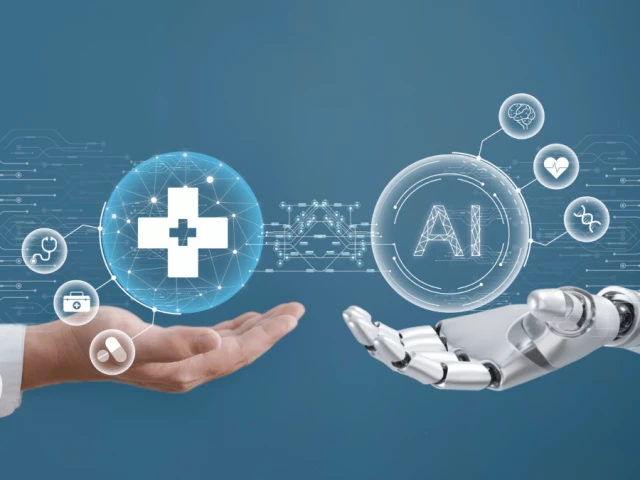

The Transformative Role of AI in Healthcare: A Leap Toward Smarter Solutions
Artificial Intelligence (AI) is revolutionizing the healthcare landscape, and it’s happening faster than many of us realize. Imagine a world where your medical data is not just stacked away in files but actively helping you understand your health better. Well, it’s unfolding right before our eyes with innovations like Anthropic’s Claude and OpenAI’s ChatGPT Health.
What’s New?
Just this week, Anthropic introduced new healthcare features for its AI assistant, allowing users to connect their medical records and health apps. This means you can upload lab results, medical history, and data from your fitness tracker into the platform. The AI reads all that info, translating complex medical jargon into plain language. It can point out patterns, organize your health details, and even suggest questions that might be important to ask your doctor. Think of it as a personal assistant for your health — offering clarity through the fog of medical paperwork, not replacing your healthcare provider.
The Bigger Picture: AI in Global Healthcare
The potential of AI goes beyond just making sense of your records. Globally, AI is already aiding doctors in diagnosing conditions like lung cancer with increased accuracy. It’s streamlining drug discovery by scanning massive datasets to identify new compounds, drastically reducing development time from years to mere days. Imagine a scenario where the immediacy of AI allows for faster responses in healthcare crises — this capability is already taking shape.
In countries like Pakistan, where long hospital queues and scattered medical records are commonplace, the integration of AI tools could be especially transformative. Platforms that people already rely on—like Marham and Sehat Kahani—could benefit from AI’s capabilities to organize lab reports or translate complex terms into the local languages. For patients and doctors alike, the time saved could significantly enhance the quality of care.
Trusting AI with Our Health
While the potential is exciting, we must tread carefully. Companies like Anthropic and OpenAI assert that your health data stays secure and isn’t used to train AI models — you control what you share. Yet, concerns linger. Can AI accurately interpret the nuances of your health conditions? What about data security?
Doctors and digital safety experts remain cautious. Misinterpretations by AI can lead to improper advice, potentially delaying essential treatment. The question is more profound than whether AI can handle medical data—it’s about trust in these platforms, especially in regions where digital health systems are still developing.
Wrapping It Up
AI’s role in healthcare isn’t just a passing trend; it represents a significant shift in how we manage our health. With platforms evolving to include AI capabilities, we’re moving toward a future where healthcare becomes more personalized and accessible. However, it’s crucial to remain aware of how we engage with these technologies, always prioritizing our data’s security.
Want to be at the forefront of this innovative change? At Pro21st, we keep a close eye on these trends and their implications for health and wellness. Stay informed and connected with us as AI continues to shape the future of healthcare!