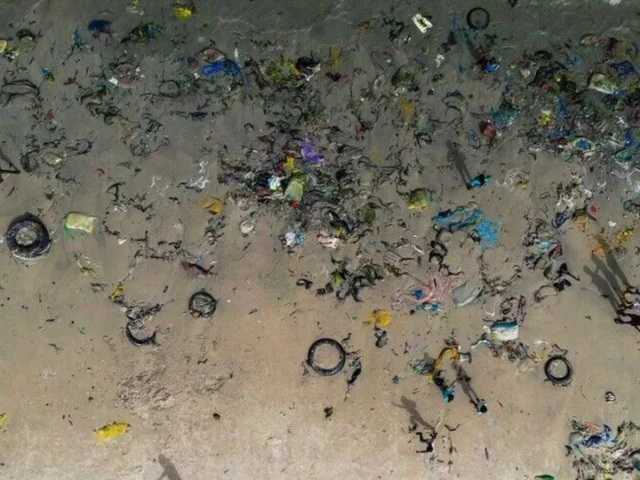

Tackling the Plastic Problem: Japan’s Innovative AI Solution
In recent years, the issue of plastic pollution has become a pressing concern for our oceans. Scientists and environmentalists alike are searching for effective ways to monitor and manage marine waste. Enter the latest innovation from Japanese researchers at the Japan Agency for Marine-Earth Science and Technology: an artificial intelligence system called DeepLitterAI. With the ability to detect marine plastic waste on the seabed at nearly double the speed of human capabilities, this technology is a promising step forward in our ongoing battle against ocean pollution.
How DeepLitterAI Works
DeepLitterAI is designed for real-time monitoring, making it a crucial tool in identifying litter hotspots in our oceans. The team has developed a dataset of around 12,000 images taken from seabed footage, dating back to 1983. This diverse dataset includes not only plastic debris but also non-litter objects like rocks and marine life. By training the AI on various visual patterns—such as blurring and image inversion—the researchers have minimized the chances of false positives, enabling the system to effectively differentiate between waste and other seabed features.
During testing, DeepLitterAI demonstrated its impressive capabilities by accurately detecting litter objects as small as 5% to 10% of the image width. It achieved an accuracy rate of 80% for major litter types, including plastic bottles and bags. The system’s margin of error in comparison to expert visual inspections was measured at around 10%, showcasing its reliability.
The Future of Marine Monitoring
The implications of this technology are significant. "We can quickly identify areas where large amounts of waste accumulate and use this information to implement countermeasures," said Ryota Nakajima, a biological oceanographer on the research team. This proactive approach allows for targeted cleanup efforts and helps to safeguard marine ecosystems from the devastating effects of plastic pollution.
As we continue to grapple with environmental issues, innovations like DeepLitterAI offer hope for more efficient monitoring and management of our precious oceans. Engaging with experts and supporters of marine conservation initiatives can further amplify the impact of such breakthroughs.
If you’re passionate about marine preservation or curious about how technology is transforming environmental science, consider connecting with communities and organizations like Pro21st. Together, we can work towards a cleaner, healthier ocean for generations to come.